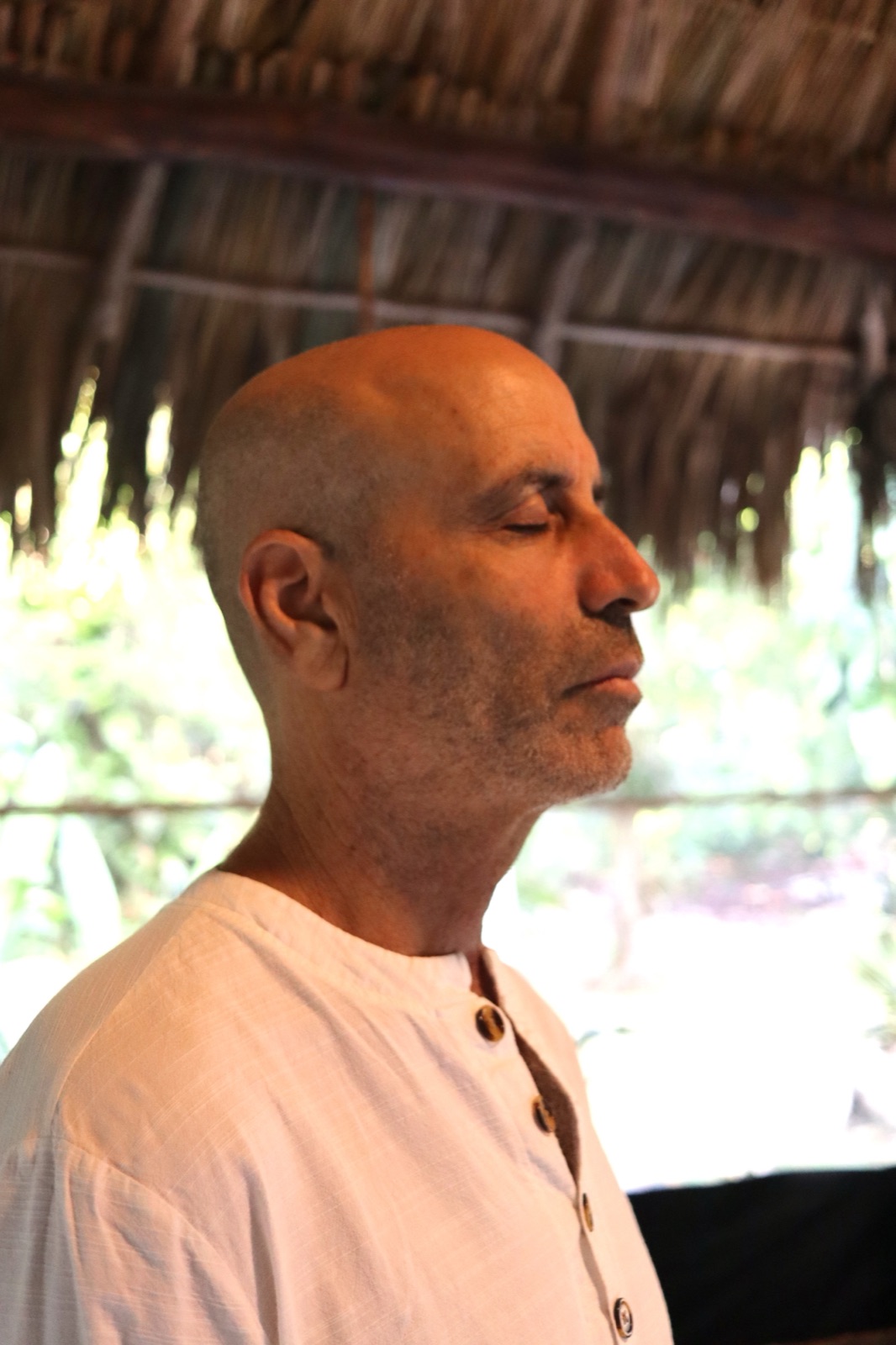
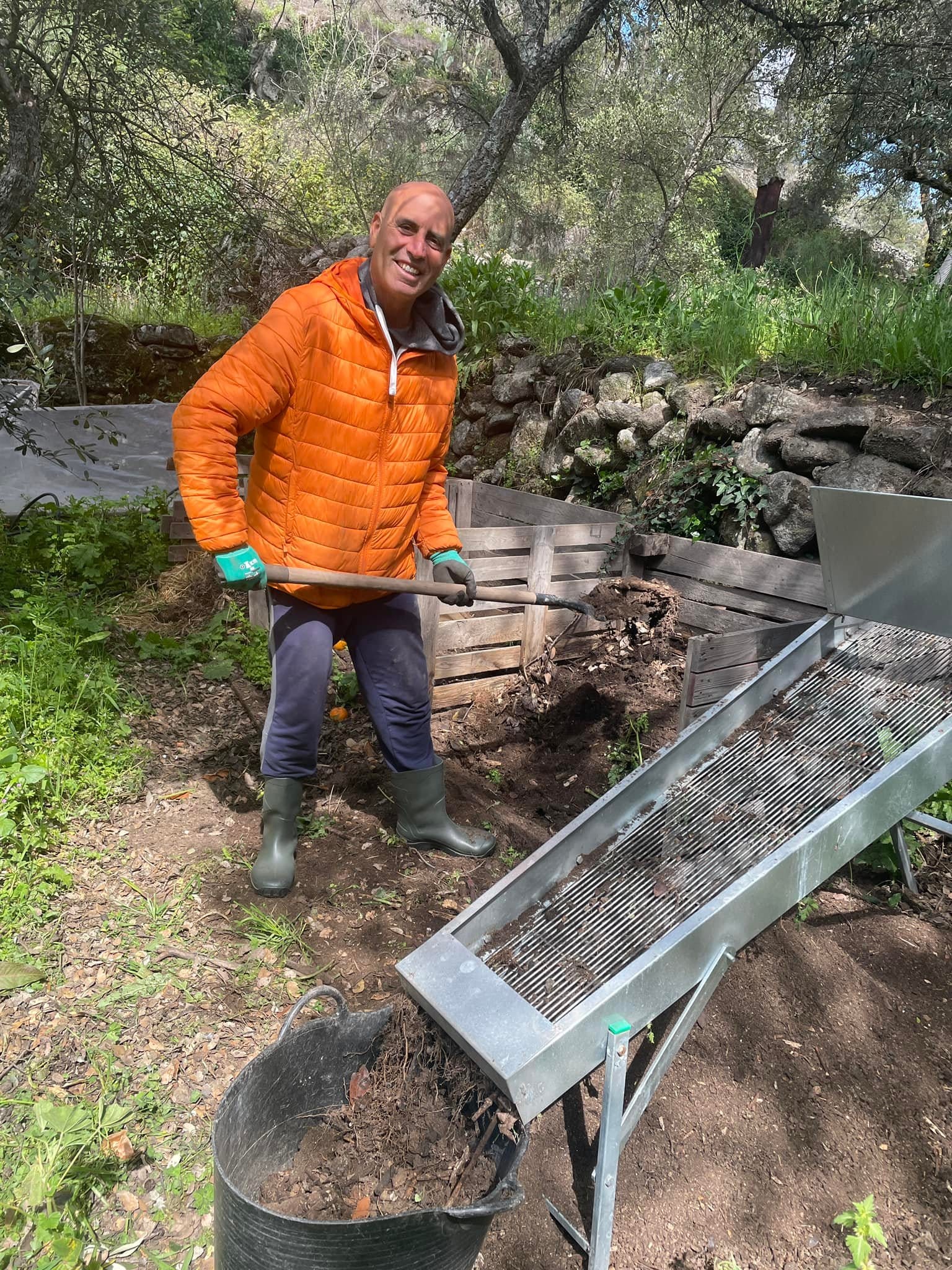
Chi OmSelf Awareness Coach & Guide for Self Inquiry
Awareness is not something you achieve. It is something you recognize. It is the simple noticing of what is happening, right now, without trying to fix or change it. When we lose touch with it, we suffer, pulled into thought, into fear, into the story we keep telling ourselves. Chi's work is helping people find their way back, again and again, because we all forget.
These are practices, not concepts — something to come back to when you forget, when you suffer, when the mind starts cycling. Each one is a way back to yourself.
It is what it is
— suffering is the fight with what is
The moment itself is rarely the problem. The problem is what we build on top of it. The wishing, the resisting, the running through of how it should have been different.
Chi puts it like this: "We don't suffer from the physical pain. We suffer from the emotional pain. Because what if? What if? And then, and how?! — all these things."
Look closely. Most of what hurts is not the sensation. It is the story about the sensation. The cold rain plus the wish that it should not be raining. The difficult conversation plus the rehearsal of how it should have gone. The body that aches plus the thought: 'what if this never stops?'
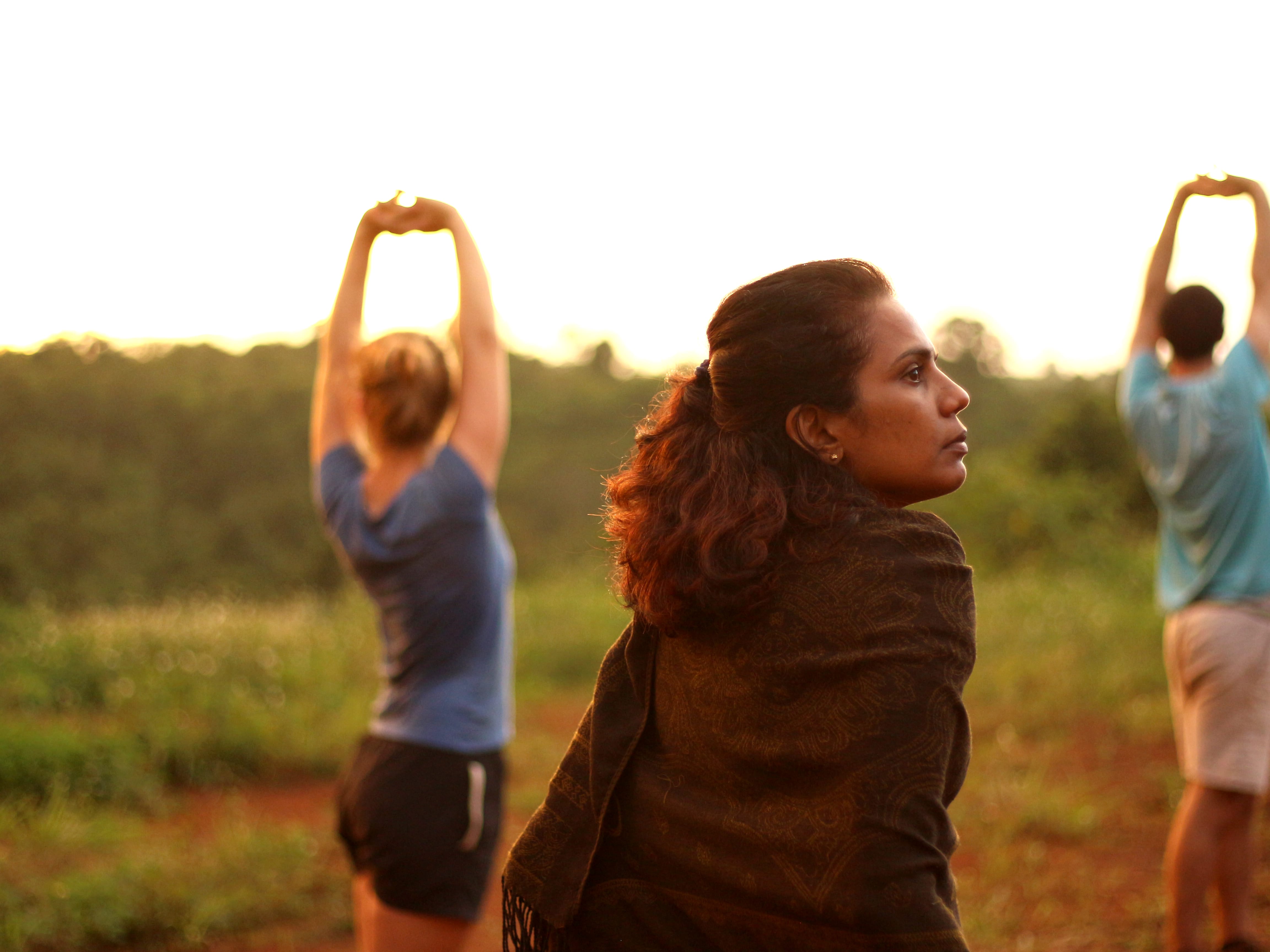
Meet what is here, without trying to move it. The image Chi uses is stretching, leaning gently into the sensation rather than away from it. Not fixing. Not running. Just staying.
The moment is what it is. The fight is the only optional part. Stop fighting, and the moment is still here — and so are you, finally, with it.
His path
A few words about his life
His story is not what defines him — or what he teaches. Read it lightly. Or skip it entirely.
CChi was born Yigal Lenman in 1971 in Israel. When he was still small, his parents moved the family from the city to a Kibbutz. They did not want to handle the burden of daily life alone. They wanted community, a more peaceful and connected way of living. Even as a young child, around three, Chi felt that something was off about the way people lived. "Everything is upside down. Something does not make sense, even though I didn't know what it was." He loved the Kibbutz itself — the space, the animals, the open land — but he could not find his place with kids his own age. There was always tension. By six or seven, he had quietly given up on his peers and started spending his days with the adults in the Kibbutz, who took him under their wing in the garden and with the animals. He hated school, and he developed an early aversion to his own family, who pushed him to be someone he was not.
At eighteen, Chi was sent to the army. He refused combat and asked instead to train soldiers in physical exercise, breath work, and early forms of what would later become practice. It was the first time he saw what he could do with people: take them through something difficult, and have them come out trusting it. The reputation that built around him was, in his own words: "he can take you through, but it is not going to be easy to go through." After the army, he tried to make money. He moved through one business after another: garden design, building, cooking, horses, training dogs, guarding clubs at night. None of it resonated. The focus was always money, never quality, and by his early twenties life still looked, as Chi puts it, very annoying.
At twenty-four, Chi left Israel for the first time. A man he had met while guarding clubs at night invited him to travel through Southeast Asia for half a year, and Chi — who had never flown before, spoke only Hebrew, and had almost no money — went anyway. The six months across Nepal, Vietnam, and Thailand broke open the world he had been living inside. The first flight, the new country, the unfamiliar food, the heat and the mosquitoes, the emotional pain of being completely outside his frame — all of it felt impossibly difficult, and all of it kept pulling him forward. Something in him already knew he had to keep going. From there he went to Australia and worked two shifts a day in a bakery and a garden, where he met his first wife. They cycled four months across New Zealand, then moved to the United States, where she studied Pilates and he worked in real estate in San Francisco.
In San Francisco, he met someone who introduced him to Byron Katie, Ramana Maharshi, and J. Krishnamurti. For the first time, words matched something he had been feeling but had no language for. He began practicing Qigong and Tai Chi. He and his first wife had a son. Each of them, in his own words, "peacefully went to a different path." About eight months later, Chi realized he needed a radical change. He quit real estate, set aside everything he had been building, and turned, for the first time, fully toward himself. "I got the glimpse that I am the solution for my suffering." He spent almost two years back in the States with a small sangha — four people coming and going — and built a dog-training business on the side. He went on his first Vipassana retreat in California and stayed half a year supporting the teachers there. Then he travelled — India, Brazil, months alone in the jungle — and eventually settled into almost two years of near-silence, hours of daily practice, "just diving into myself."
Something stronger than me knew within me, you have to keep going.
In 2009, after almost two years almost entirely alone: long stretches of silence, days of practice with hardly a person around. Something quietly arrived. It was not the dramatic enlightenment Chi had read about in books. It was the opposite. "It was very simple, very profound, but it's very ordinary — that we experience it all of us all day long, we don't even know." He had spent years expecting some grand experience that would deliver him; what came instead was the recognition that what he had been looking for was already happening, all the time, beneath the noise of the mind. The shift this triggered was as plain as the moment itself: "It's nothing to realize who I am. I don't have to have realization, I don't have to have enlightenment moment. I have to work with what's covering who I am." From that point on, Chi's work was not about seeking — it was about meeting the conditioning that obscures what is already here. He also felt something else arise: a clear pull to share what he had seen. Not as a mission he chose, but as something that moved through him on its own. And he understood where both kinds of work — the meeting and the sharing — had to happen: not in solitude, but in being engaged in life, in people, in relationships.
Later that same year, Chi and a friend from the sangha drove from California down through Mexico to the Caribbean coast, where they settled in Playa del Carmen. For the first time, Chi started to teach openly. He and his friend ran ten-day Vipassana retreats together on a donation basis, and people began to gather. After about a year, his friend continued on his own path, and Chi's life moved into long, looping arcs: years of practice and quiet teaching across India, Brazil, Mexico, Cambodia, and the Himalayas. He went to South India and Thailand, then back. People kept finding him, almost always through someone who had met him somewhere. "Nothing internet, nothing. Someone met me, tell someone." Groups stayed small. Some came for a few weeks, some for a few months.
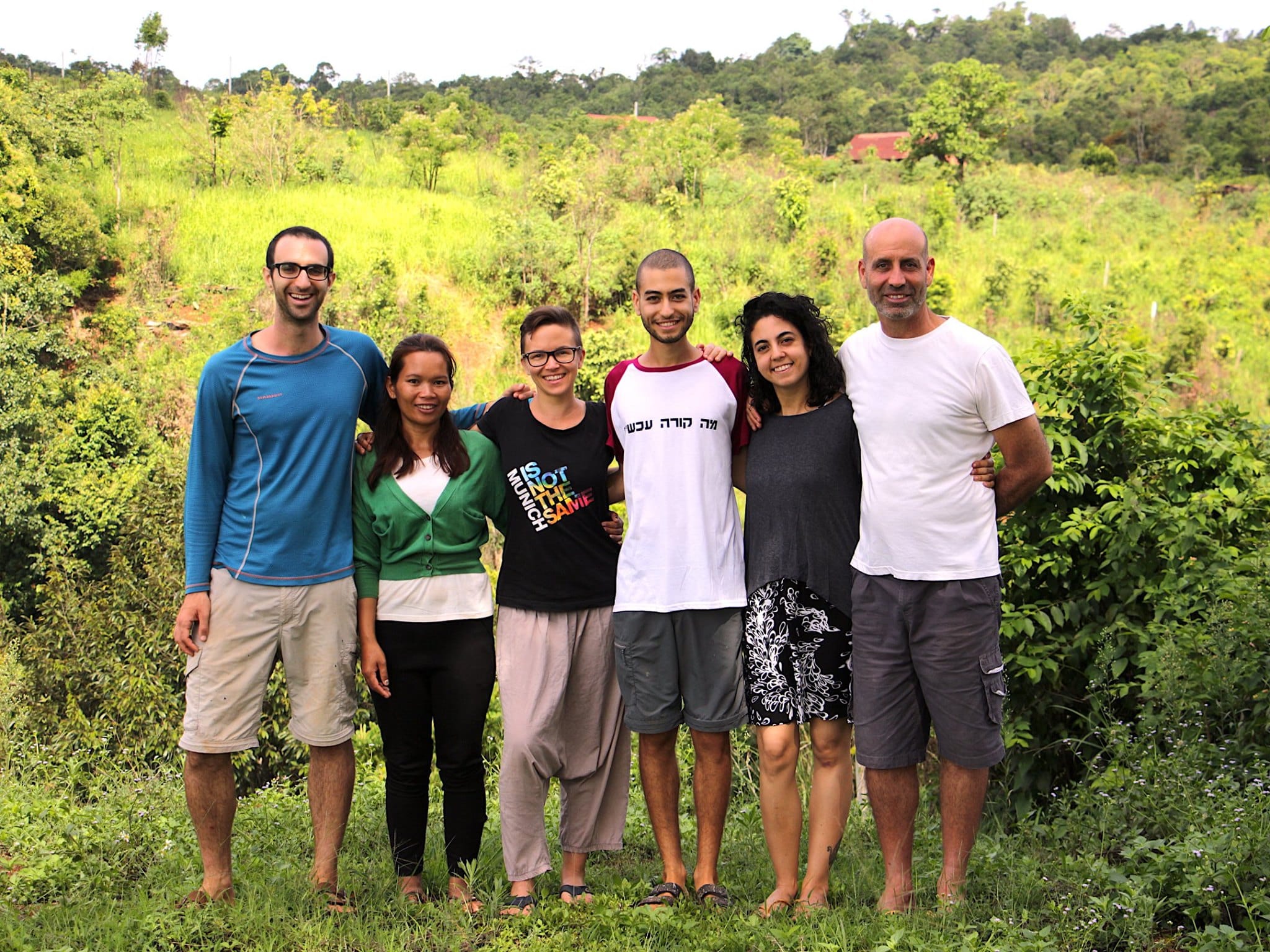
In the Himalayas, through a friend, Chi met his current partner, Chia. They eventually moved to Cambodia, where they spent three years together hosting retreats. Then COVID arrived. After a decade of teaching and travel, Chi and Chia paused and let the quiet do its work. They came back to their own practice, and to the essence of what actually matters. And out of that stillness, the dream of community returned.
You cannot live in a jungle alone.
And then the search began. The kind of community Chi and Chia were looking for was specific: one where the people were truly committed to inner work. They visited groups, sat with them, tried one and then another. Time and again, they found the same thing: people sharing meals and chores, but not actually doing the deeper work together. That was the missing piece.
Chi had grown up in a community, and he had carried something from it ever since: the support, the peace, the way shared life carries you through what you cannot carry alone. But the community he wanted to build now was something more. A place where practice was the center, not the edge. Where people came together not just to share a roof, but to share the work of returning to themselves. That is what he is building now.
I'm a simple being like anyone else. No big enlightenment. No big guru. No big practice. I practice like anyone else, still asking myself the same questions I ask everyone.
Without the formal practice, the rest stays as ideas. With it, it becomes how you live.
The teachings are the what. The practices are the how: the daily work that makes a different way of living actually possible. These are the ones Chi returns to: the sitting, the inquiry, the slow movement, the breath. They work.
Audio · 22 min
Guided standing meditation — with Chi Om
Meditation
— standing · walking · sitting
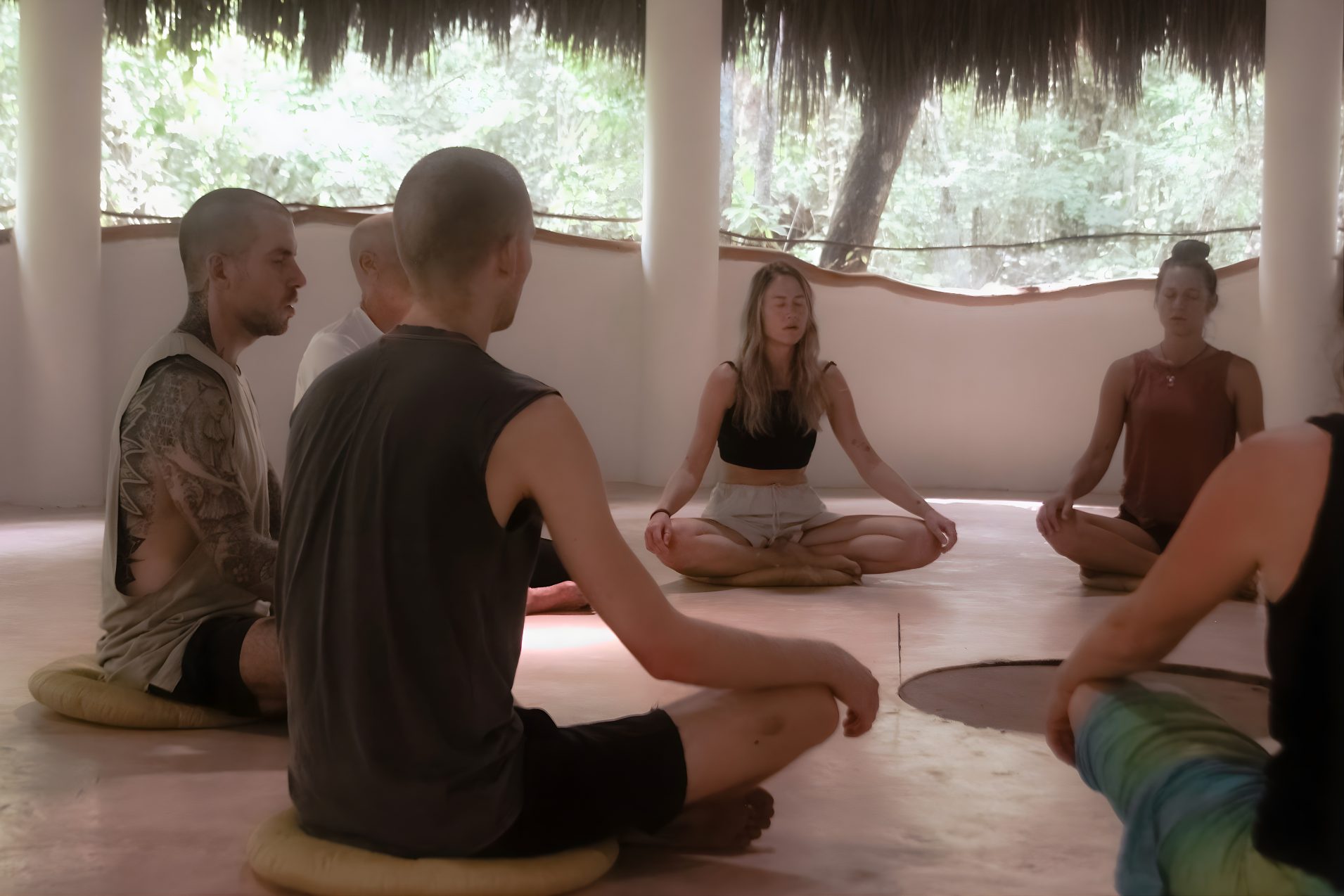
Meditation is how we stop long enough to actually see the mind. With the distractions removed, what is left becomes visible: the patterns, the thoughts, the things we usually do not notice we are doing. Seeing what is there is the first step. You cannot work with a mind you cannot see.
Qigong
— slow movement · breath · presence
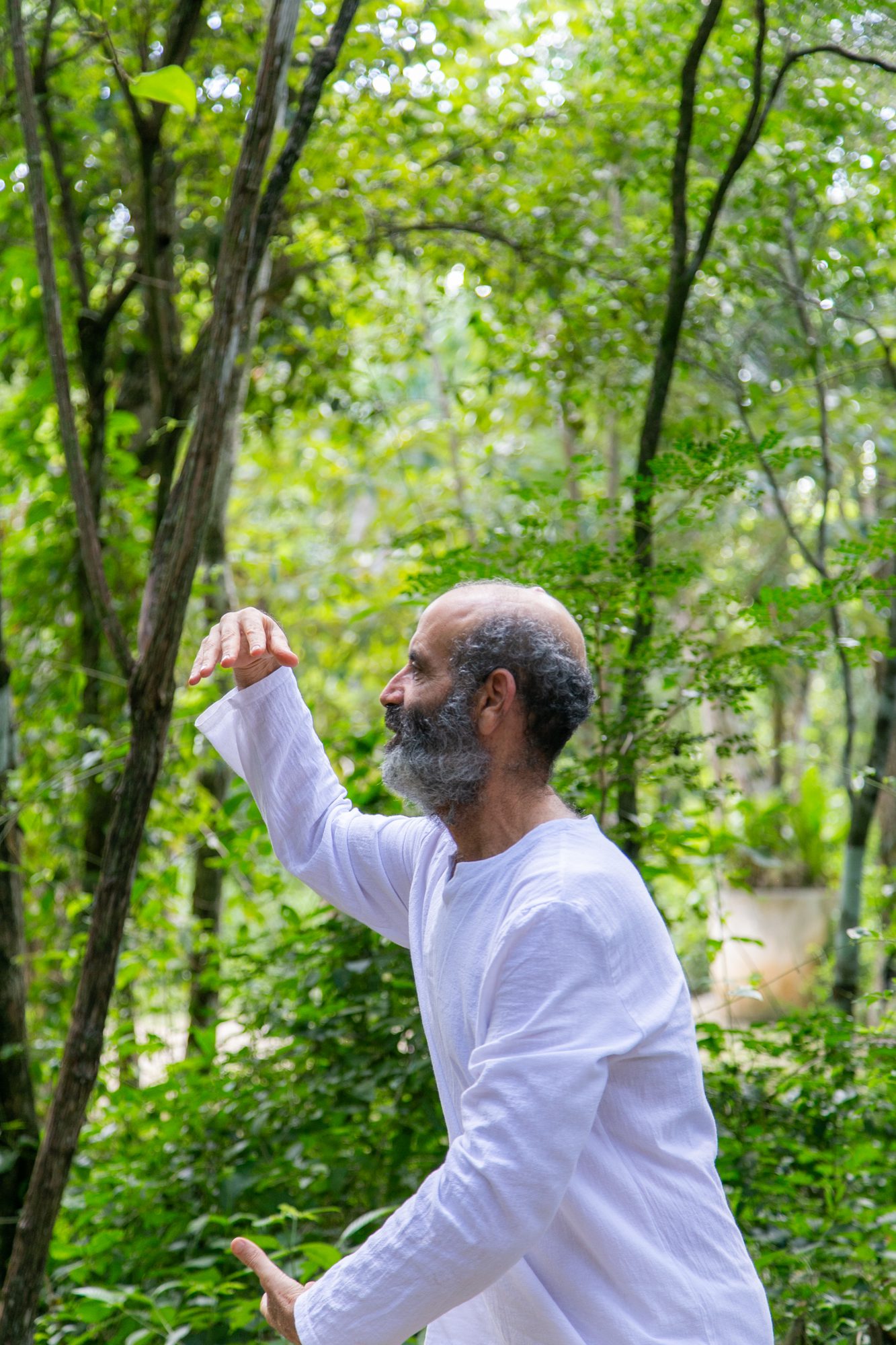
Qigong is not Chi's invention. It is one of the oldest continuously practiced disciplines in the world — Chinese in origin, more than two thousand years old, threaded through both Daoist philosophy and Chinese medicine. He was introduced to it in San Francisco 30 years ago and has practiced it almost every day since. The movements are slow, the breath coordinated with each gesture. What it does is easier to feel than to describe: the body softens, the mind quiets, and whatever was tight or hurried in you starts to settle.
Life as a practice
— kitchen · conversation · reaction
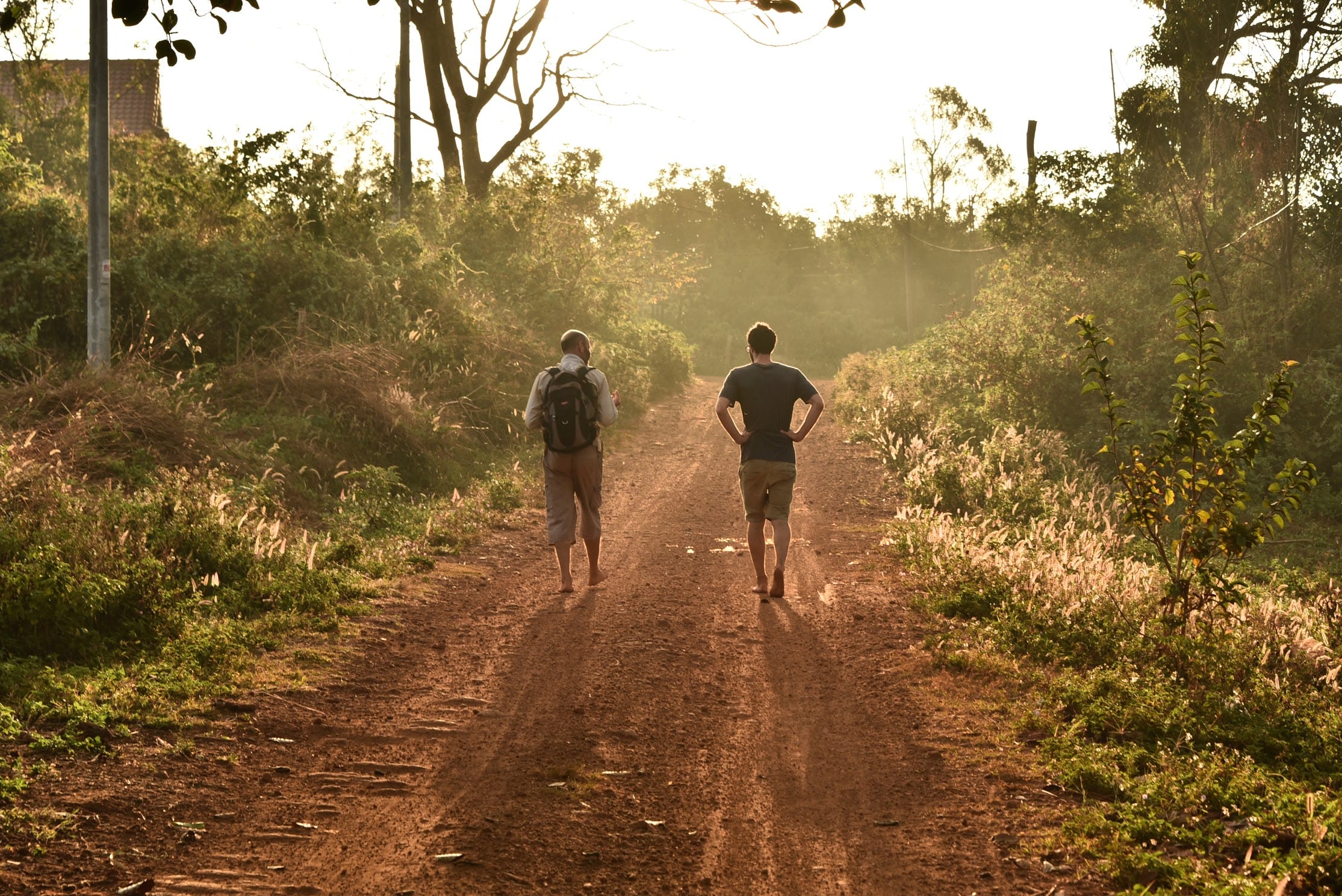
The formal practices are meant to leave the meditation hall. The clarity, the peace, the insight you find in those uninterrupted hours are not meant to stay there. They are meant to come with you. Into the kitchen. Into the difficult conversation. Into the moment you usually react without thinking. If awareness only shows up when you sit, it has not really arrived. The training builds the capacity. The actual practice is the rest of the day.
Inquiry
— honest questions · turning inward
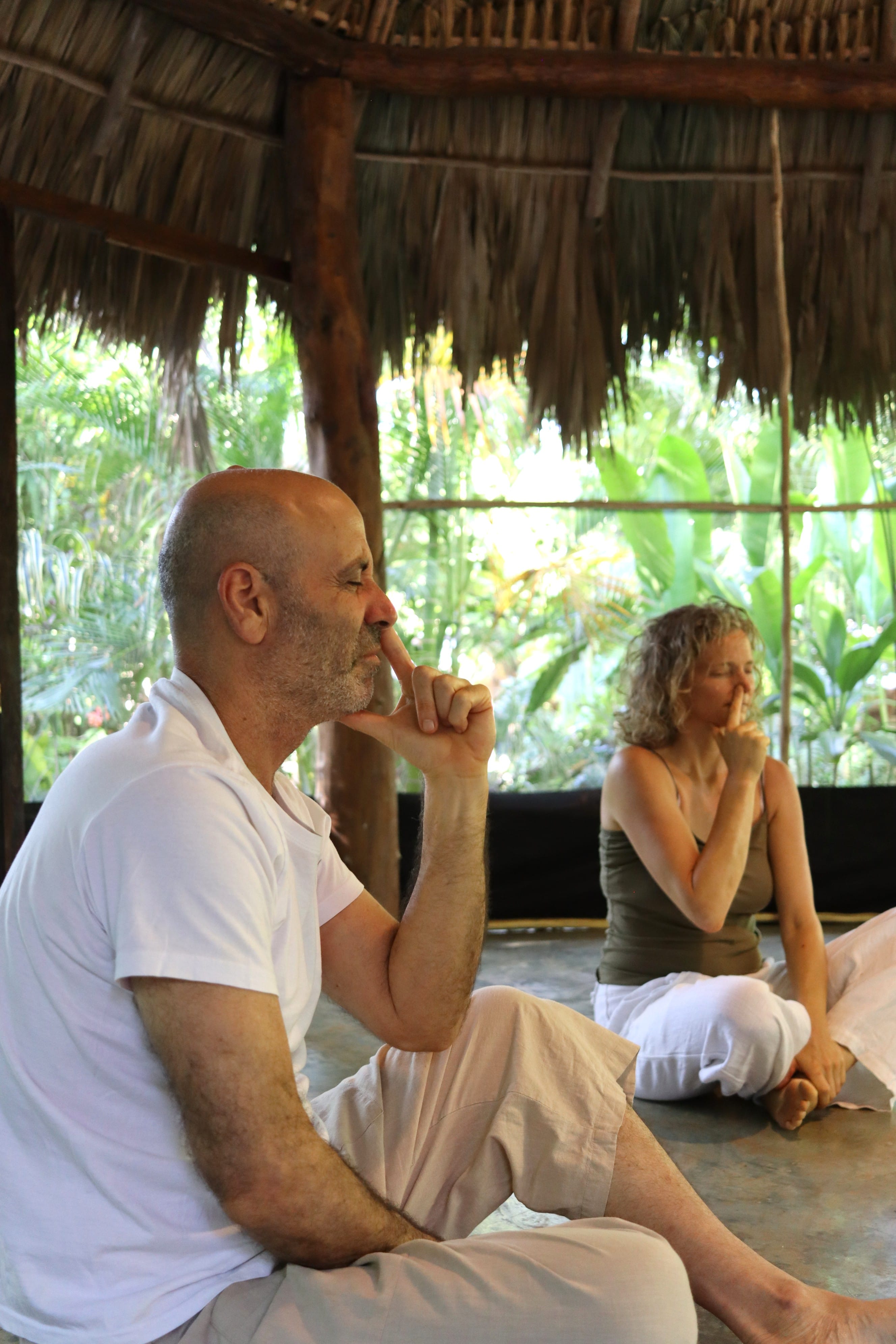
Inquiry is the work of looking honestly at what the mind tells you and asking whether it is actually true. The practice is inspired by Byron Katie's 'The Work'. The form has been shaped by Chi's own years of inquiry and refined through decades of guiding others. What comes through now is blunt, practical, and shaped by long experience. We do it because most of our suffering is built on thoughts we never questioned: inherited beliefs, repeated stories, fears about things that have not happened. Until those thoughts are examined, they keep running us. Once they are examined, most of them start to lose their grip, and we begin to see what is actually real.
Conscious movement
Pranayama, Yoga & stretching
— breath · flow · open the body
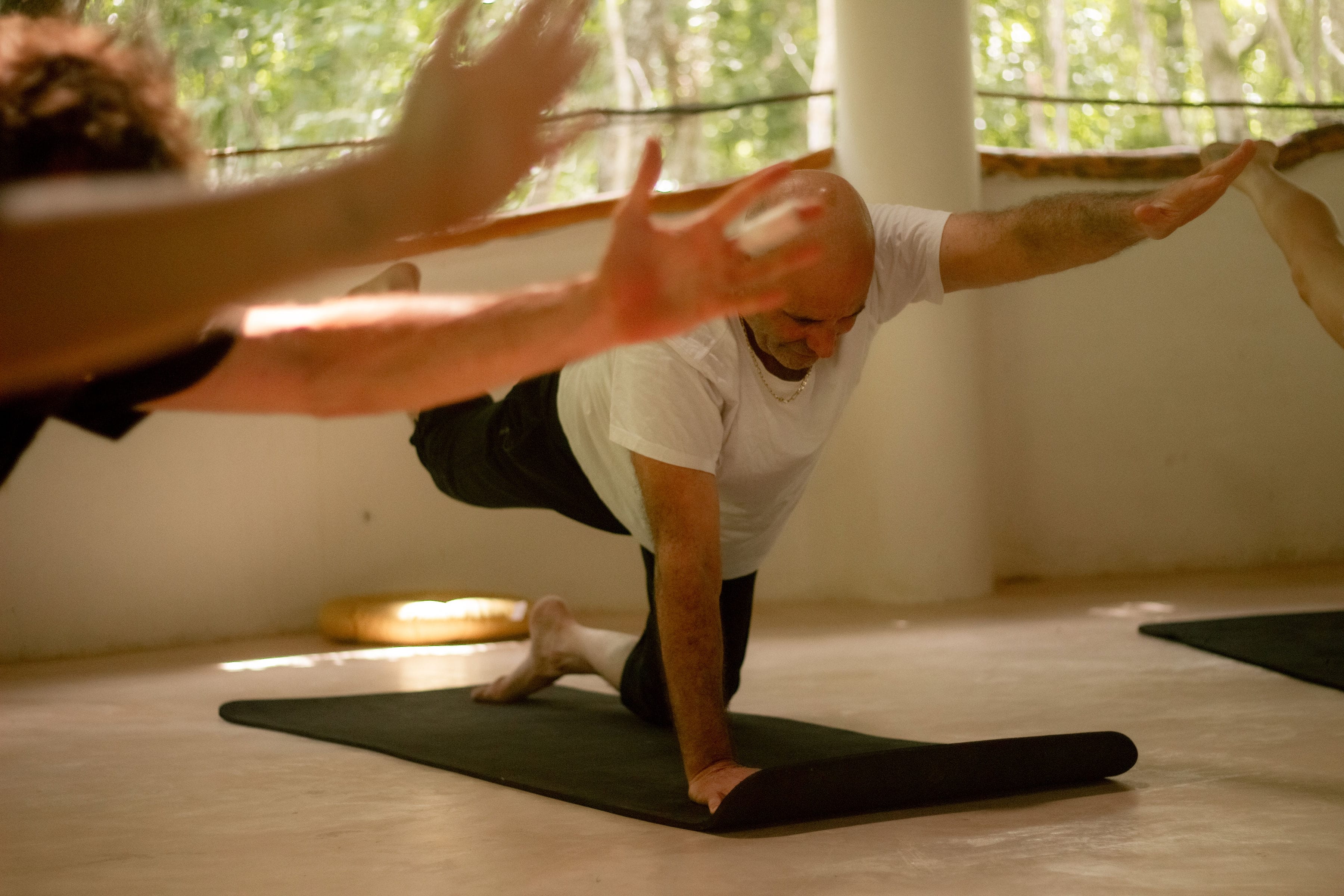
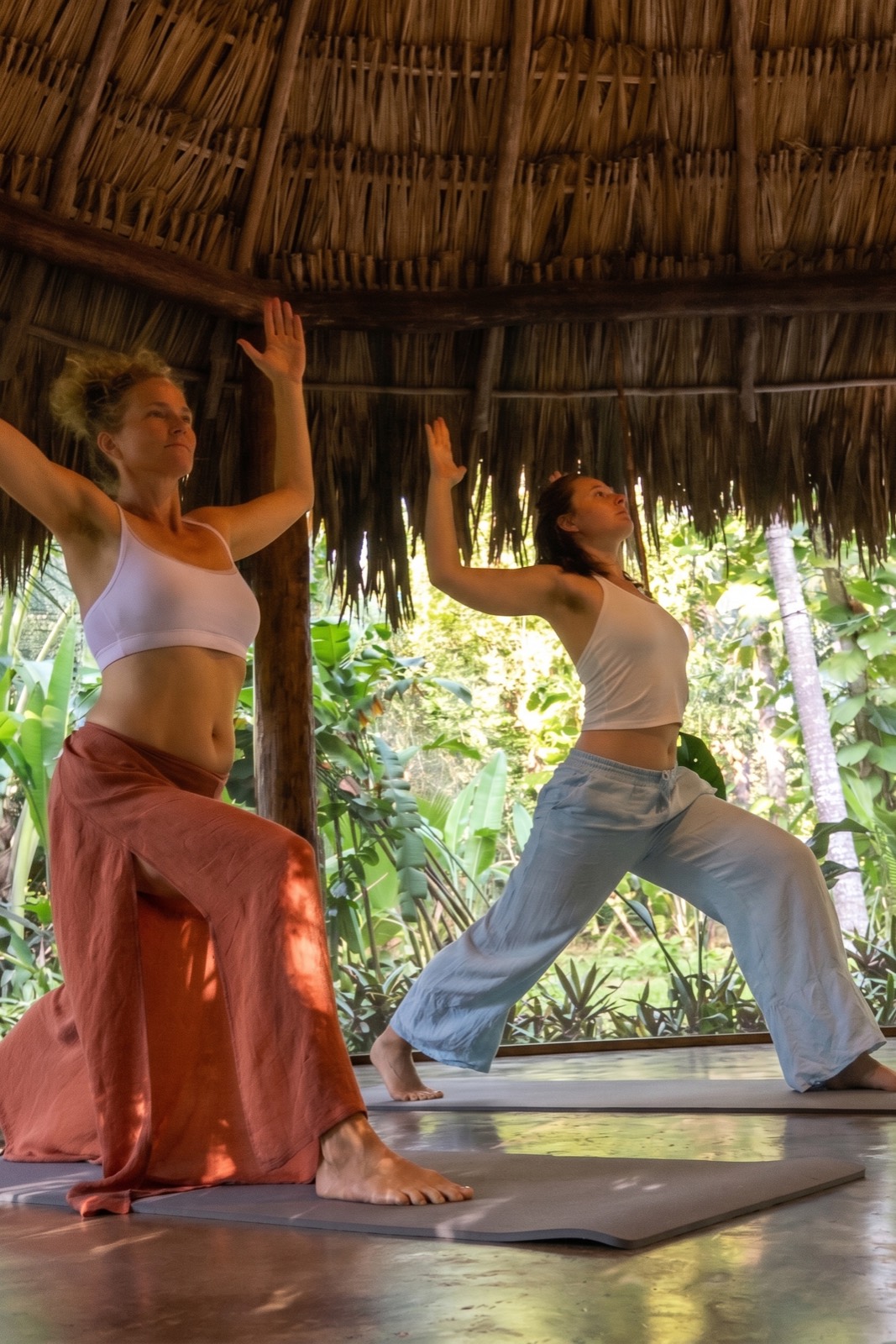
Most of us live in a body that has been tight and rushed for years. A body in that state cannot fully work with the mind; the two are too closely linked, and the body has to come first. Pranayama is the breath, used on purpose, with movement. Yoga and stretching is meeting the body where it is. Together they release what has been held in the body and bring real energy into the day. Chi has taught some form of this since he was eighteen, first to soldiers in the Israeli army, later studying further with teachers in South India and refining it through his own years of practice. The style is direct, embodied, stripped of anything that does not actually do something.
Chi keeps a small number of online sessions open each month, for those who cannot come in person, and for people continuing work that started here, who want help carrying it into daily life. There may be a waiting list.
No framework. No concepts to memorize. You bring the thing you have not been able to move on your own, and Chi walks you through it: practical, direct, focused on actual change. This is not therapy. It is for people who want support breaking out of patterns that are no longer serving them.